Concrete Walkways That Improve Safety and Curb Appeal
The walkway leading from your driveway to your front door gets used every single day. So do the paths connecting your side gate, your backyard, and your garage. These surfaces do quiet, essential work — and most homeowners don't think much about them until someone trips, a delivery driver loses footing, or a guest comments on how rough things look.
By the time a walkway has become noticeably dangerous or visually embarrassing, it has usually been declining for a while. Concrete doesn't fail suddenly. It deteriorates gradually through freeze-thaw cycles, ground movement, tree root intrusion, and years of foot traffic — and the western suburbs of Chicago deliver all of those conditions in abundance.
The good news is that a new concrete walkway is one of the most cost-effective improvements a homeowner can make. It solves a real safety problem, delivers an immediate visual upgrade, and holds up for decades when properly installed.
The Safety Case for Replacing Deteriorated Walkways
Replacing a deteriorated
concrete walkway
eliminates those hazards with a flat, properly sloped surface that manages drainage and gives every person who uses it a safe, predictable path to walk.
What Causes Walkways to Become Uneven and Hazardous
Understanding the causes of walkway deterioration helps homeowners recognize when a situation is getting worse and make the case for replacement before a fall occurs.
Frost heaving is the most common cause of uneven walkways in the Addison area. When the ground freezes in winter, it expands — and it doesn't expand uniformly. Sections of soil beneath a walkway slab can push upward at different rates, causing adjacent sections of concrete to shift to different heights. When the ground thaws, the sections may not settle back to their original positions, leaving a permanent elevation difference between slabs.
Tree root intrusion is a significant problem in established neighborhoods throughout Bloomingdale, Villa Park, and Elmhurst, where mature trees line property edges and parkways. Roots grow toward moisture, and the soil beneath a concrete walkway retains moisture. As roots grow beneath the slab, they push sections upward from below — sometimes dramatically. A raised section driven by a tree root can appear quickly compared to frost heaving and tends to get worse each growing season.
Soil erosion and settlement beneath the slab washes away sub-base material over time, creating voids that the concrete eventually sinks into. Sections that settle downward are less obviously hazardous than raised sections, but they create low spots that collect water — which accelerates freeze-thaw damage and leads to cracking and further settlement.
Concrete cracking from any of the above causes, or from shrinkage and thermal movement, creates edges and surface variations that snag feet and deteriorate further as water infiltrates the cracks and cycles through winter freezes.
Curb Appeal: What Your Walkway Says About Your Home
The walkway from the street to your front door is part of the first impression your home makes. Before a visitor reaches the door, before they see your landscaping or your siding, they walk the path you've laid out for them. A cracked, patchy, or weed-invaded walkway undercuts everything else you've invested in your property's appearance.
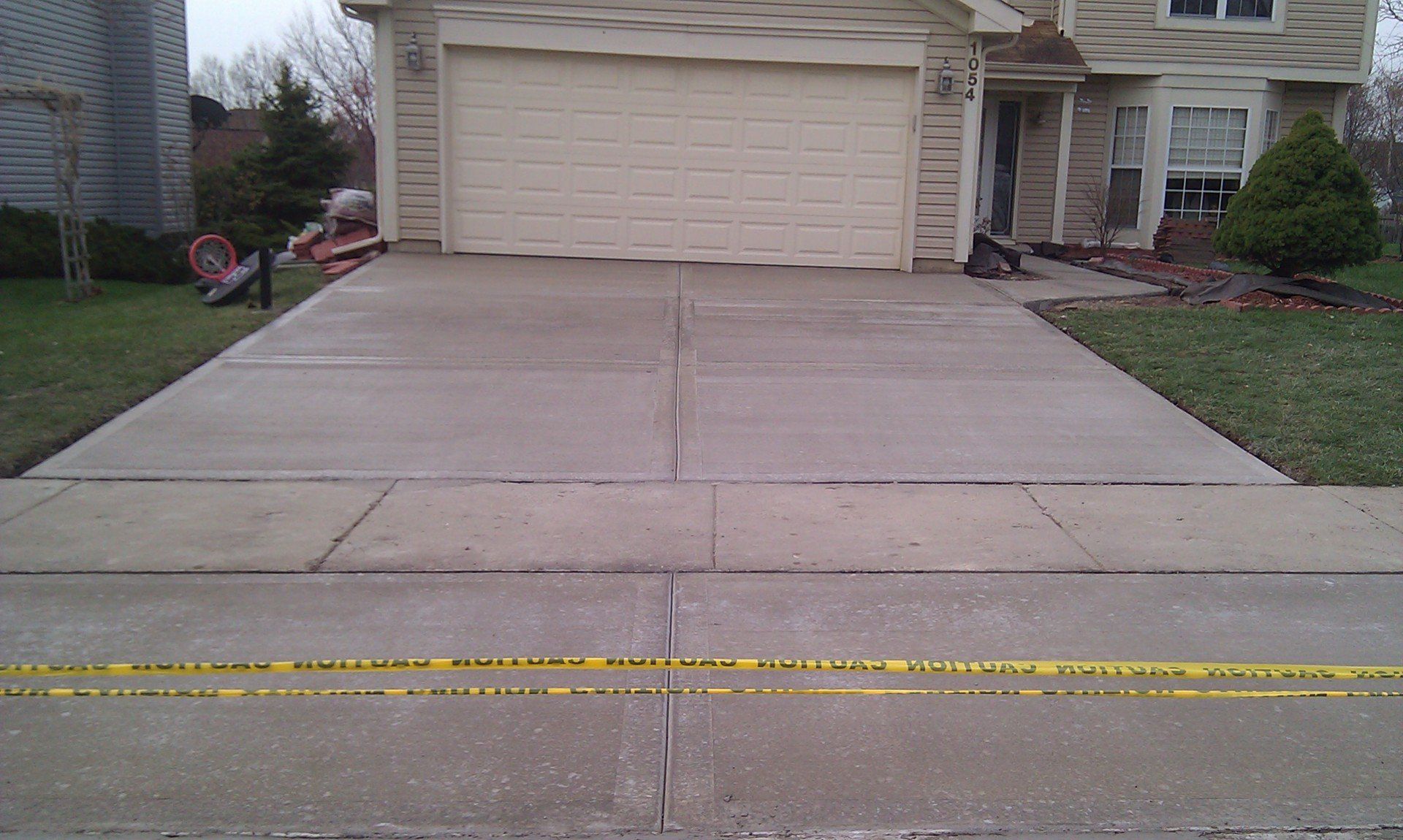
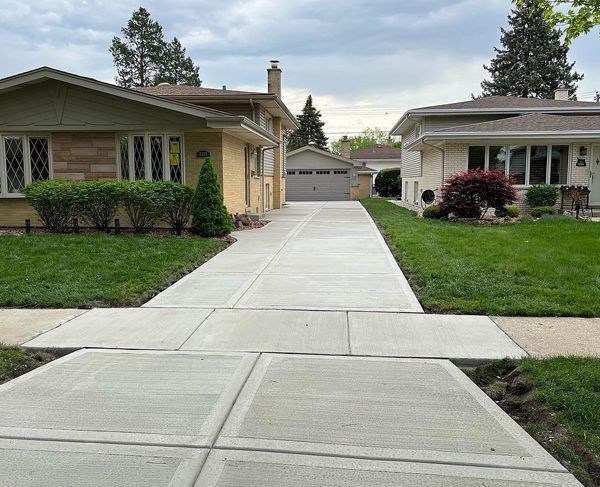
New concrete walkways in Elmhurst and the surrounding area consistently rank among the highest-impact exterior improvements homeowners report after the fact. The before-and-after difference is immediate and significant — a clean, smooth, properly proportioned walkway transforms the approach to a home in a way that painting or landscaping touches can't fully achieve on their own.
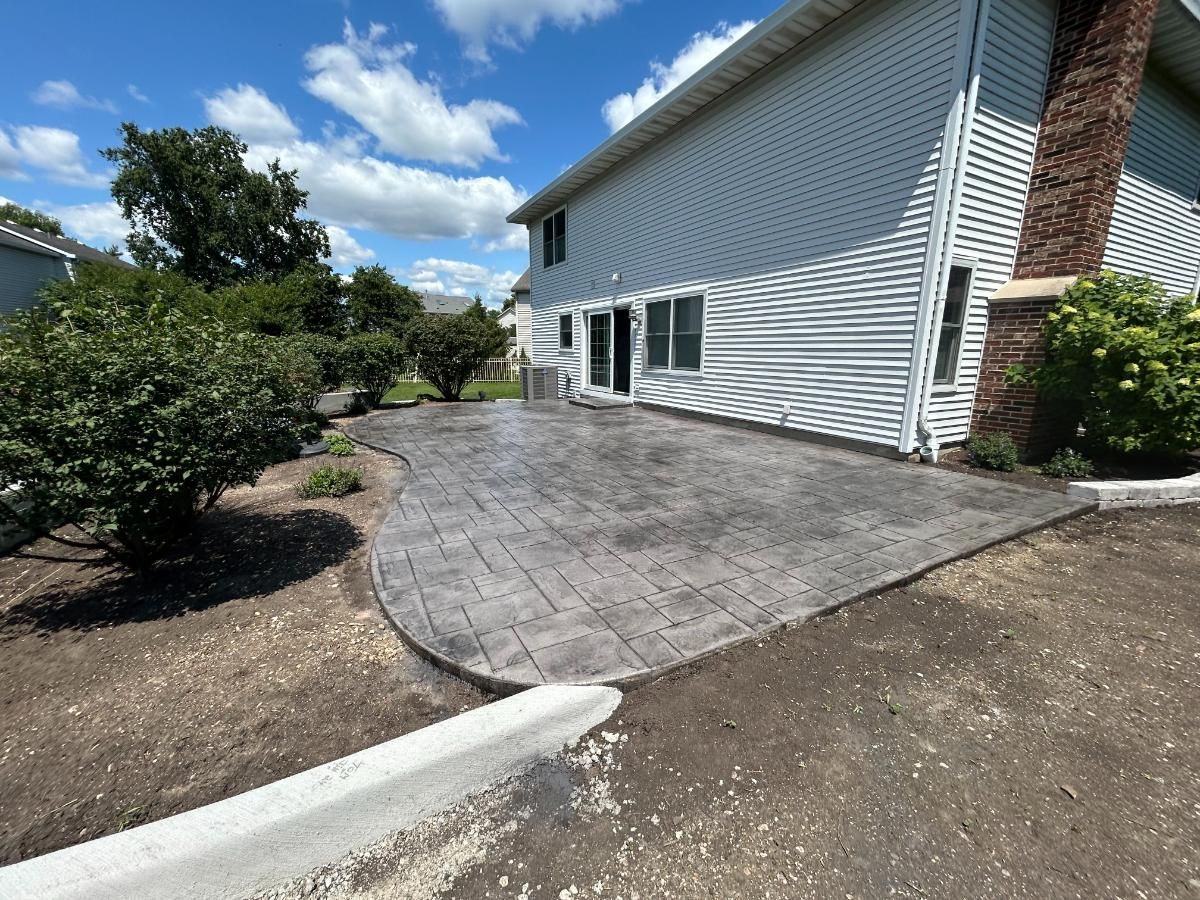
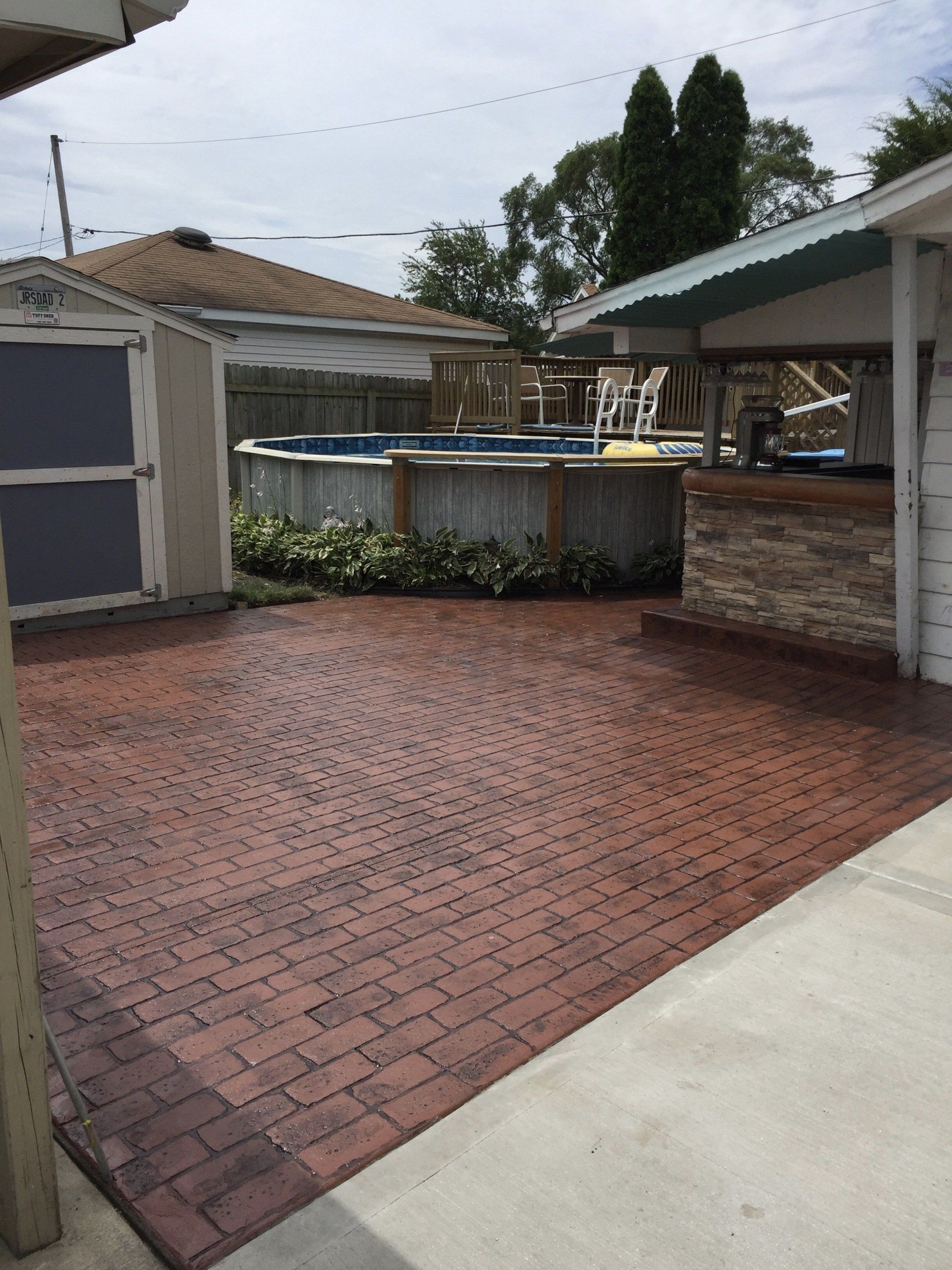
Design choices also matter more than homeowners sometimes realize. A walkway doesn't have to be a plain gray rectangle. Broom-finished concrete with a defined border gives a clean, classic look. Exposed aggregate adds texture and visual interest. Stamped concrete patterns can tie the walkway material to an existing patio or complement the home's exterior materials. RJ Concrete installs concrete walkways throughout the western suburbs with finish options suited to each homeowner's aesthetic goals and budget.
Signs Your Walkway Needs to Be Replaced
Some walkway damage can be repaired — isolated cracks can be filled, and minor settlement can sometimes be addressed with mudjacking. But many walkways in aging suburban neighborhoods have reached the point where replacement is the more sensible investment.
Replacement is generally the right call when sections have shifted more than an inch vertically, when cracking is widespread across the surface rather than isolated, when tree root damage has raised multiple sections significantly, when the walkway has been repaired previously without lasting results, or when the concrete is old enough that its surface has deteriorated to the point where it looks consistently rough and worn across its full length.
Homeowners in Villa Park and Bloomingdale with walkways installed in the 1980s or 1990s are increasingly finding that the cumulative effect of decades of freeze-thaw cycles, root intrusion, and normal wear has brought their walkways to end-of-life condition. A professional assessment from a
concrete contractor serving the Downers Grove area is the most reliable way to determine what the right course of action is for a specific situation.
What a Properly Installed Walkway Looks Like
The visible surface of a walkway is only part of the story. What happens below grade determines how the walkway performs over its service life.
Proper installation begins with excavation to an adequate depth — enough to accommodate a compacted gravel base of four to six inches beneath the concrete slab. That gravel layer provides drainage and a stable, compacted surface for the slab to rest on. Skipping or shortcutting the base is one of the most common reasons replacement walkways fail in the same way and on the same timeline as the originals.
Slab thickness should be a minimum of four inches for residential pedestrian walkways. The slab should be pitched slightly — typically one-eighth inch per foot — perpendicular to the direction of travel, to direct water off the surface rather than allowing it to pool. Control joints at appropriate intervals — generally every four to six feet — manage where shrinkage cracking occurs, keeping it predictable and contained.
Where tree roots are a factor, an experienced contractor will evaluate whether root barriers, modified routing, or other measures make sense to extend the life of the new walkway. In some cases, rerouting the walkway to avoid the root zone is the most practical long-term solution.
Connecting Walkways to the Rest of Your Property
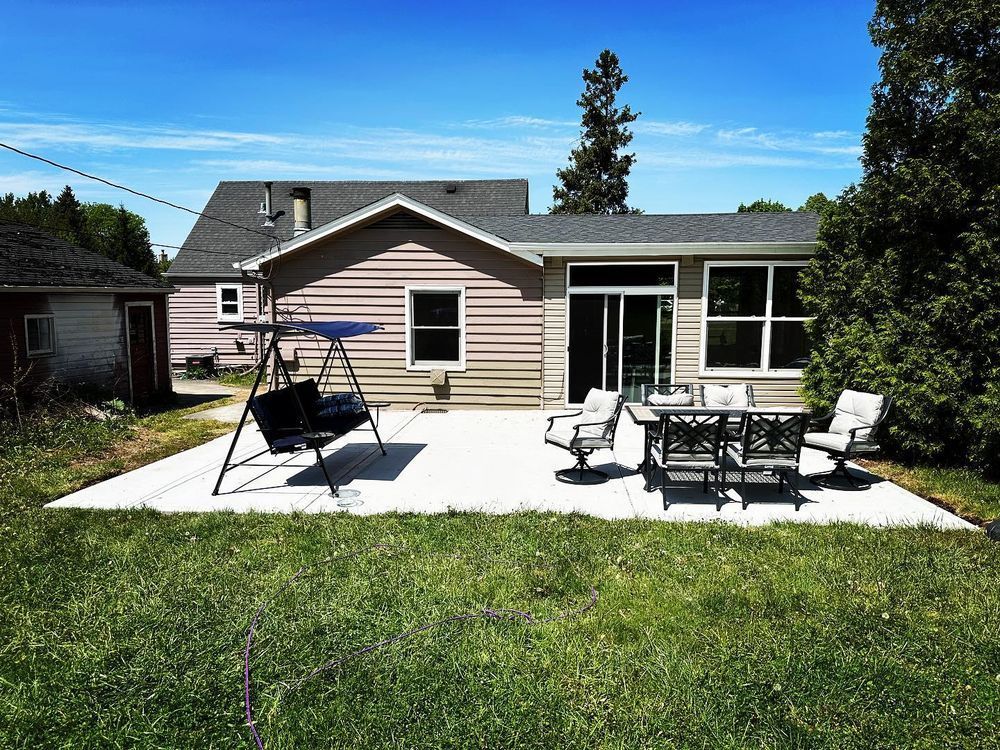
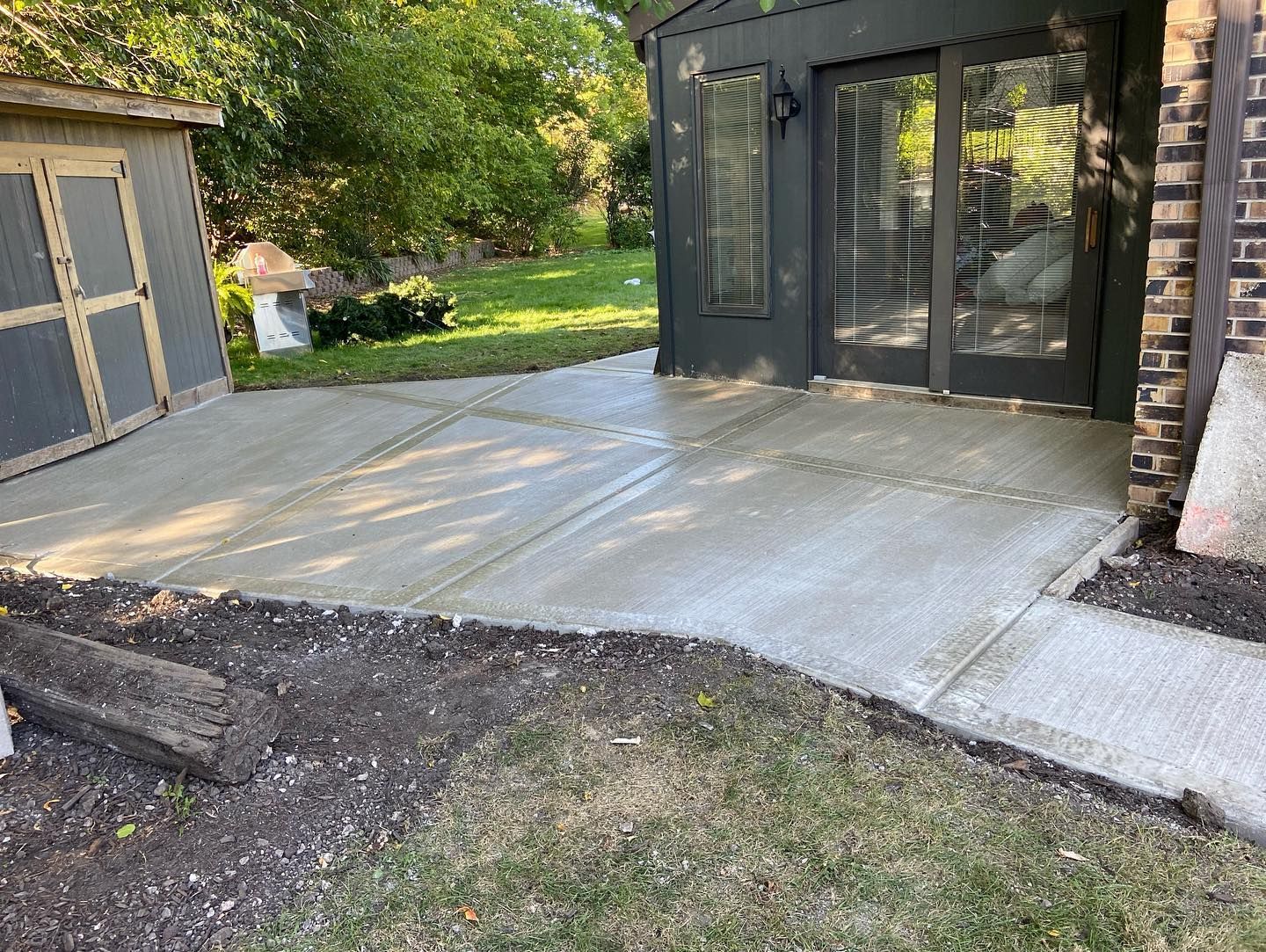
A new front walkway often prompts homeowners to think about the other concrete paths on their property — the walk from the driveway to the back gate, the path from the back door to a detached garage, or the connection between a patio and a side yard. These paths are subject to the same deterioration as the front walk and often show the same signs of aging.
Planning connected walkway work together in a single project is almost always more cost-effective than scheduling each section separately. RJ Concrete works with homeowners throughout Addison and the western suburbs to assess all connected concrete paths at once, providing a comprehensive picture of what needs attention now and what can be deferred — and offering the efficiency of a single mobilization when multiple sections are addressed together.
For homeowners in
Hinsdale looking for a walkway contractor, or those throughout the surrounding communities, RJ Concrete provides free estimates and can assess your full property layout in a single visit.
Frequently Asked Questions
When should concrete sidewalks and walkways be replaced?
Concrete walkways should be evaluated for replacement when sections have shifted vertically by half an inch or more, when cracking is widespread across the surface, when tree root damage has raised multiple sections, or when the concrete is old enough that it has deteriorated significantly on the surface. Walkways that have been repaired multiple times without lasting results are also strong candidates for full replacement rather than additional patching. A professional assessment is the most reliable way to determine the right course of action for a specific walkway.
Are uneven walkways legally considered dangerous?
Yes. A vertical displacement of half an inch or more between adjacent concrete sections is widely recognized as a tripping hazard under safety and liability standards. Homeowners have an obligation to maintain safe conditions on their property for guests, visitors, and service workers. An uneven walkway that has met or exceeded that threshold represents real liability exposure in addition to the obvious safety risk to anyone who uses it regularly.
How do new concrete walkways improve curb appeal?
A new concrete walkway immediately improves the approach to a home — replacing cracked, patchy, or weed-invaded surfaces with a clean, smooth, consistently finished path. The improvement is especially significant because the walkway is the surface guests, buyers, and visitors physically interact with as they approach the home. Design options including exposed aggregate, stamped patterns, and contrasting borders allow homeowners to create a walkway that complements the home's exterior rather than detracting from it.
Can a heaved or uneven walkway be leveled instead of replaced?
In some cases, yes. Mudjacking — pumping a slurry beneath a settled slab to raise it back to grade — can address sections that have settled downward and are still structurally intact. However, sections that have been pushed upward by tree roots or frost heaving are more difficult to address without replacement, because the root or ground condition causing the movement is still present. Leveling is most appropriate as a solution when the cause of movement has been addressed and the concrete itself is in otherwise sound condition.
How long do concrete walkways last?
A properly installed concrete walkway typically lasts 25 to 30 years or more. The primary factors affecting longevity are sub-base preparation, slab thickness, control joint placement, and consistent sealing. In the western suburbs of Chicago, freeze-thaw conditions and tree root intrusion are the most common factors that shorten walkway lifespan below that range. Walkways installed with adequate sub-base preparation and appropriate thickness generally outlast those installed with shortcuts by a significant margin.
What finish options are available for concrete walkways?
The most common finish for residential walkways is a broom finish, which provides a lightly textured surface for traction and a clean, classic appearance. Exposed aggregate is a popular alternative that adds visual interest and a naturally slip-resistant texture. Stamped concrete patterns are an option for homeowners who want walkway materials that coordinate with an existing patio or other decorative concrete on the property. Your contractor can walk you through which options are appropriate for your specific project and how they compare in cost.
Do I need a permit to replace a sidewalk or walkway in Addison, IL?
Permit requirements vary by municipality and by whether the walkway is on private property or within the public right-of-way. Parkway sidewalks — those between the curb and the property line — typically involve coordination with the municipality and may have specific requirements around materials and grades. RJ Concrete is familiar with local requirements throughout Addison and the surrounding communities and can advise on what applies to your project during the estimating process.